
Why Your Client Is Still Stuck After Years of Therapy (Preverbal Trauma & EMDR Stuck Points)
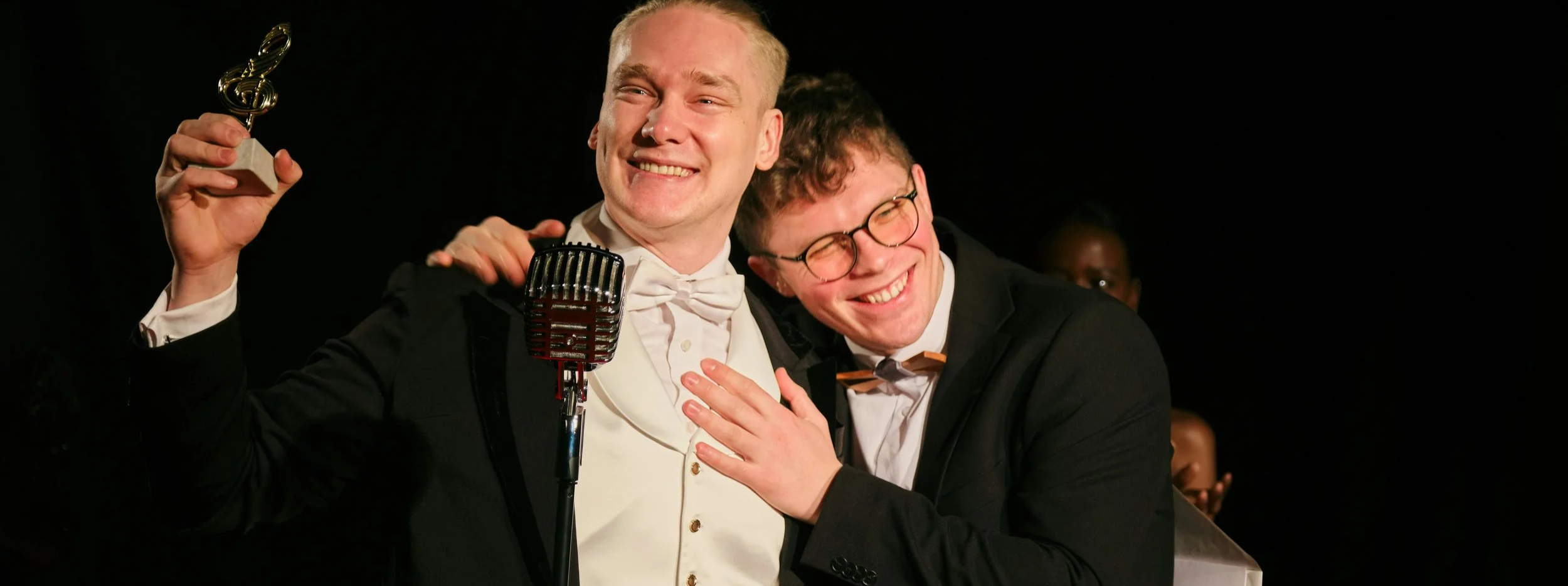
“Congratulations, Mr. Kaplan." The principal says as he shakes his hand warmly. "Teacher of the year award goes to you. It's very well deserved."
David Kaplan smiles. Nods. And says the right things… how grateful he is to be in his teaching role, and how humbled he is to receive this award.
He's good at saying the right things. Has been, pretty much all his life.
In the school ballroom, he is surrounded by balloons. Specifically, yellow ones, because everyone knows that's his favorite color. A large vanilla frosted cake. And smiling faces, looking up at David Kaplan, admiring his hard work and devotion.
As soon as he received the award on stage, the room bursts into a loud applause, and then, a standing ovation.
The room is filled with people who know him to be the kind of teacher kids remember for the rest of their lives.
And while everyone is looking at Mr. Kaplan, standing in the middle of the celebration, smiling, here's what no one can see: the stone in his chest, the size of a fist.

And here's why.
He'll be home by four. By four fifteen, he'll have a glass of wine in his hand. By six, it will be his third.
Not in an obvious way anyone would point to and say, “that's the problem”. But just enough to quiet something he can't locate or describe.
But there’s something that arrives every evening without an invitation and sits in his chest like a stone.
Yes, he's a stellar teacher, he's been teaching third grade for fourteen years. And he's not just any teacher; he's the kind of teacher who notices everything. The child who's too quiet. The lunchbox that's always half empty. The eyes that say something their mouth never would. He sees them. All of them.
And paradoxically, nobody, not one person in that room full of balloons and yellow cake, truly sees him.
He's been in therapy for six years. He's insightful. He does the work. He can map his history, name his patterns, explain exactly why he is the way he is.
He's processed things that mattered, and has made some really good changes. His boundaries have gotten better, he’s more self-aware, and his own kids have been enjoying his company more than they used to.
And yet, the wine is still there.
Every night. The same pull. The same stone in his chest that only numbs with wine.
Here's what may surprise you: His problem isn't the wine.
The wine is doing its job.
Quietly suppressing something that lives so far beneath the surface that six years of good therapy haven't been able to reach it.
Why? Because what he's drinking away every night isn't a memory. It's an emotional state.
Let me bring you to the beginning, to the first time he sat across from me.
He sat down the way men sit when they're trying not to show how tired they are. Jacket still on. Tie still straight. Everything still in place.
Except his eyes. His eyes were doing something his posture wasn't, they were looking for somewhere to land.
I felt it immediately, the way you feel things when you've been sitting across from people long enough that you stop listening to what they say and start feeling what they're carrying.
There were two men in my office that day. The man who had just won Teacher of the Year for the third time. And the man underneath him. The one who was exhausted from holding the first one up.
What struck me most wasn't what he said, it was the gap between his words and his body.
He could articulate everything. His history, his patterns, his mother's limitations, his coping strategies. He had the language of someone who had done real therapeutic work. But his body told a different story.
There was a flatness beneath the insight. A numbness he couldn't name. When I asked him what he felt in his chest when he talked about the wine, he paused. Looked at me like the question didn't compute.
"I don't know," he said. "I just know I need it."
This is what high-functioning clients with preverbal trauma often look like. Insightful. Articulate. Genuinely trying. And completely disconnected from the somatic experience driving their symptoms.
The pain wasn't something he could think about. It was something he was, a state his body lived in, beneath conscious awareness, every single day.
Preverbal Trauma: The Wound Beneath the Story
What lived inside him is a wordless, pre-narrative, anxious state his nervous system learned before it knew it was learning anything. Growing up, he had a mother who loved him the best she could, and who was also unreachable. She was physically present in the room, but somewhere else entirely, stuck in the pain of her past.
And he, was an infant who reached… and all he found was static. Again and again.
Until his nervous system stopped expecting warmth and started organizing around absence. That experience was never stored as a memory.
And that's why there's no image to target. No negative cognition to reprocess. No narrative to update.
There's just a state. A preverbal child state with the ache of reaching for love, for connection and for bonding. Who was left grasping.
This gets stored in the body… and his nervous system is still living in the original wound, decades later, reaching for a glass of wine every night to quiet the ache it cannot name.
Preverbal trauma in adults is one of the most underrecognized clinical presentations.
Because there's no explicit memory, no clear narrative, no "index event" to point to, it often gets labeled as treatment resistance, attachment issues, or personality pathology.
But it's none of those things.
It's implicit memory running the show.
Body-based trauma that was encoded before the hippocampus was online, before language existed, before the brain could make meaning of experience.
The client knows something is wrong. They feel it. They live inside it every day. But when you ask them to locate it, describe it, or trace it back to a memory, they come up empty.
That's not avoidance. That's preverbal trauma.

What Preverbal Trauma Looks Like in Session
If you're wondering whether you have a client with preverbal trauma, here's what to look for:
They're insightful, but nothing shifts. They can explain their patterns, name their wounds, map their history. And yet the symptoms persist. The insight doesn't land in the body.
They can't access an image or memory. When you ask for a target, they go blank. Not because they're avoiding, because there's nothing stored in explicit memory to retrieve.
The body holds something the mind can't name. They describe a "heaviness," a "tightness," a "something", but can't connect it to any event or narrative. The sensation is real. The story is missing.
Symptoms persist despite years of good work. They've done therapy. Real therapy. And they've made progress in many areas. But this one thing, the drinking, the anxiety, the relational pattern, won't budge.
They feel young in ways they can't explain. There's a smallness, a vulnerability, a quality of fear that doesn't match their adult competence. Because the part holding the wound is young, preverbal young.
If this sounds familiar, you're not dealing with resistance. You're dealing with a wound that lives beneath the floorboards.
EMDR Stuck Points: When the Protocol Stops Working
This is where so many clinicians get stuck.
We ask for the memory. We look for the belief. We search for the target.
And when the client says:
"I don't know."
"There's nothing there."
"It just… feels like something."
We assume we haven't found it yet.
We dig deeper. We try different floatback techniques. We wonder if they're avoiding.
But what if there's nothing to find? What if the wound isn't a memory at all?
This is the stuck point.
Not because the client is resistant. Not because therapy isn't working.
But because the tools we're trained in, insight, narrative, even standard EMDR, are built to work with explicit material:
memories
images
beliefs
story
And some wounds have none of that.
Some wounds are engraved on the body, in a state, and in a nervous system repeating something it learned before words existed.
Sandra Paulsen calls it the symptom shrine.
When a wound happens before words, before the brain can make sense of it, the body doesn't forget. It builds a monument instead. A ritual. A behavior that serves the wound without ever naming it.
You see this in the client who keeps choosing unavailable partners.
In the one who can't stop overworking no matter how much they understand why.
In the one whose anxiety spikes every Sunday night for reasons they've never been able to name.
The shrine isn't the problem. It's the body's way of staying close to a wound it was never given the chance to heal.
His shrine is the wine.

Not because he's weak. Not because he lacks insight. Not because therapy failed.
But because the wine numbs the hollow feeling in his chest, the ache of the infant who reached and found nothing. The part that needed connection and got static instead.
Every evening, the hollow feeling arrives. And every evening, the wine quiets it, not by healing it, but by numbing it just enough to get through another night.
The part of him that needs the wine is living somewhere beneath the insight, beneath the narrative, beneath everything he can tell you about himself.
Robin Shapiro calls it the ego state that “never got the news”.
The part still living in the original wound. Reaching for something to cope with the pain, because nobody ever ever helped it process the experience for it to know the danger [or painful reality] was over.
Dolores Mosquera speaks to this in her work with complex trauma and dissociation.
When trauma is early and relational, the system doesn't just hold memory, it organizes into parts. And some of those parts have no access to narrative at all. They communicate through sensation, impulse, and relational reaction.
Which means talking about them will never reach them.
You have to go somewhere else entirely.
You Cannot Talk Your Way Out of This
You cannot process a shrine by talking about it. You have to go to what it's protecting. You need to work beneath the floorboards to actually make a shift.
In our sessions…when we stopped targeting the wine, and started working with the infant state beneath it, the work changed.
We weren't processing a memory. We were offering presence to a part that had never received it.
This is what it means to work beneath the floorboards.

Not asking for images. Not searching for cognitions. But going to the body. The state. The wordless place where the wound still lives.
And offering that part something it never had:
A witness.
Someone who could be with it, not to fix it, not to move it along, but to finally see what it had been holding all alone.
Slowly, that part began to update. Process and heal.
Not through insight. Through experience… finally being met in the place it had always been alone.
—-
One day, mid-session, he paused. Put his hand on his chest.
"It's not a stone anymore," he said. "It's… softer. Like something finally exhaled."
He didn't decide to drink less. He didn't use willpower.
The part that needed the wine, protecting the infant stuck in the reach, reaching for connection, had begun to feel met. Not overnight, but consistently.
So now turning to you dear reader..
If you have a client like him, brilliant, insightful, and still stuck, the one whose symptom shrine is still standing after years of good work…
I want you to consider this: The wound might not be where you've been looking.
It may be living beneath the story, beneath the memory, beneath the narrative, beneath everything they can tell you.
And it requires a different map to reach it.
This is exactly what I'm teaching inside the EMDR Stuck Points & Preverbal Trauma Masterclass.
The 3 invisible stuck points that keep EMDR looping
How to work without memory, image, or narrative
The symptom shrine and how to approach it
Clinical frameworks from Sandra Paulsen, Robin Shapiro, Dolores Mosquera, Jim Knipe, and more
If you read this and felt something shift, not just in your head, but in your body, that's the work calling you.
👉 Grab a guest pass here.
Frequently Asked Questions
What is preverbal trauma?
Preverbal trauma refers to traumatic experiences that occurred before a child developed language — typically in the first 18-24 months of life. Because these experiences happen before the brain can create narrative memory, they're stored in the body as sensations, states, and implicit patterns rather than as memories that can be consciously recalled.
Why does EMDR get stuck with preverbal trauma?
Standard EMDR protocol relies on accessing a target memory, image, or negative cognition. When trauma is preverbal, there's no explicit memory to target, only a body state. This is why clients say "I don't know" or "there's nothing there" when asked for a memory. The wound is real, but it lives beneath narrative.
What is a symptom shrine?
A term from Sandra Paulsen describing how the body creates rituals or behaviors that serve an early wound without naming it. The symptom (drinking, overworking, choosing unavailable partners) isn't the problem, it's the body's way of staying loyal to a wound it was never given the chance to heal.
How do you treat preverbal trauma if there's no memory?
You work with the body state directly, resourcing and processing the young part, offering presence and co-regulation, using bilateral stimulation with somatic experiencing rather than narrative processing. The goal is to give the preverbal part an experience it never had, not to process a memory that doesn't exist.
What's the difference between preverbal trauma and attachment trauma?
They often overlap, but preverbal trauma specifically refers to the timing , before language. Attachment trauma can happen at any age. Preverbal trauma is a subset of early relational trauma where the wound was encoded before the brain could make meaning of it.
How do I know if my client has preverbal trauma?
Look for: insight without shift, inability to access images or memories, body sensations they can't explain, symptoms that persist despite years of good therapy, and a quality of "youngness" or vulnerability that doesn't match their adult functioning.
Who is this masterclass for?
This is for clinicians who have sat with their own "Mr. Kaplan", the client who has done the work, has the insight, and is still stuck. It's not a beginner training. It's for therapists ready to go beneath the floorboards.
Esther Goldstein LCSW
Trauma Specialist | EMDR Consultant | traumatherapists.co